
As part of our strategy to diminish the effects of climate change we need to not only reduce our consumption of fossil fuels, we also need to plant more trees to store carbon in the ground. Trees ingest c02 and turn it into stored carbon. We also need to implement more renewable and sustainable energy projects.
4.5 tonnes of carbon are produced for the average global citizen every year and developed nations produce as much or more than twice that.
25 billion tonnes for the planet as a whole, every year.
A tonne of cO2 is emitted when you :
- Fly 3200km in an airplane
- Drive 2000kms in a large 4 x 4
- Drive around 3000kms in a mid sized car
Carbon Balance on Agricultural Lands
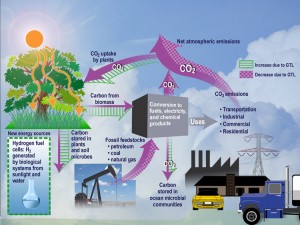
Agricultural producers can help to mitigate the effects of climate change by increasing the sequestration, or storage of carbon on agricultural land.This has been proposed as a way to slow the atmospheric and marine accumulation of greenhouse gases which are released by burning fossil fuels. Both soil and vegetation act as carbon sinks, reducing the amount of carbon dioxide in the atmosphere. Wise stewardship practices can mean more carbon is sequestered in an Agroforestry system than is lost to the atmosphere.
Increasing vegetative cover and planting trees are important ways to store carbon. Biological processes that increase vegetation and the diversity of soil micro-organisms increase carbon storage.
By using a worldwide agricultural model to estimate emissions from land-use change, it has been shown that corn-based ethanol, instead of producing a 20% savings, nearly doubles greenhouse emissions over 30 years and increases greenhouse gases for 167 years. These findings raise concerns about large bio-fuel mandates and highlight the value of developing Pongamia plantations in poor, non-arable soils.
Sustainable Plantations contributes a positive solution for our future by developing sustainable Agroforestry plantations. Superior bio-fuel plant sources are those that do not distort the global food chain, compete with fresh or crop water resources, or lead to unintended land use changes in response to the growing demand for alternative fuel sources. Our systems meet each of these criteria. Our systems can also provide substantial economic benefits to rural communities.