
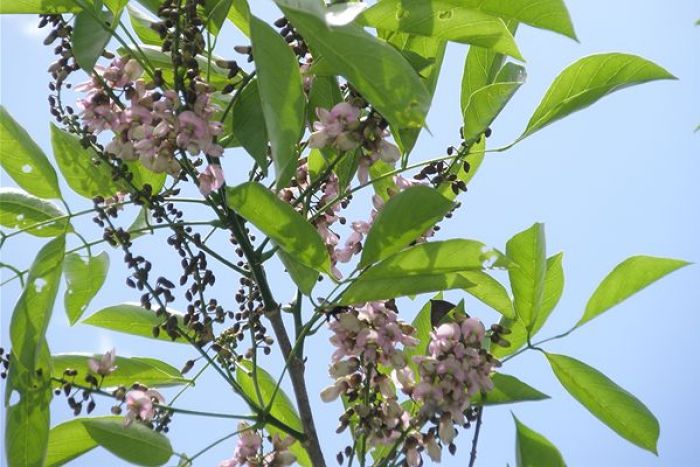
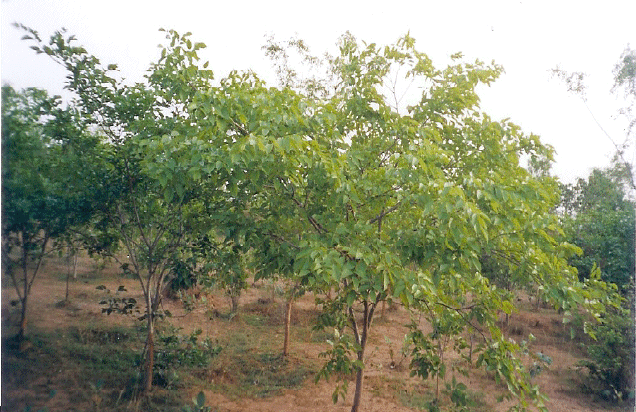
Sustainable Plantations Australia hope to see the formation of locally organized bio-fuel cooperative enterprises. The features of the Pongamia tree that make is so adaptable for cultivation within Australia can be more fully realized by a number of small plantations in a region.
The harvest and processing equipment could be shared within a co-op to and the costs of this processing shared. In this way Pongamia plantations can work towards larger scale land regeneration and help to reinvigorate rural communities.
Harvesting can be mechanically done with a nut tree shaker in the same way pecans, almonds, pistachios and other nuts are harvested.
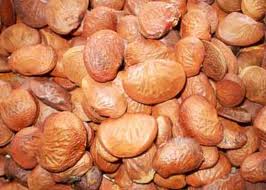
Processing after the harvest is low technology- the seeds can be shelled with a peanut sheller and then crushed with a soybean crusher or similar equipment. Portable crushing units are an inexpensive option for small size plantations.
The current and future world demands for food and clean energy translate to an excellent economic diversification opportunity. Within Australia alone, many millions of hectares of marginal land are suitable for our regenerative agro-forestry projects with Pongamia.
We would like to work with farmers, investors and community groups that seek to play a pivotal role in the development of truly sustainable fuel and agricultural sector’s and who share our vision for global fuel and food security.
To meet worldwide demand in the future, agriculture productivity must increase by 1-2% per year, more than doubling total output by 2050, according to the Global Harvest Initiative’s 2012 GAP Index report.
At the same time, global demand for biofuels is projected to increase by 133% by the year 2020, according to Hart Energy’s Global Biofuels Outlook Report 2010.
A recent report from the UN Commission on Trade and Development (UNCTAD) titled “Trade and Environment Review 2013: Wake Up Before It’s Too Late: Make Agriculture Truly Sustainable Now For Food Security In A Changing Climate” which included contributions from more than 60 experts around the world is an urgent call for us to return to and develop a more sustainable, natural and organic systems.
According to the report, major changes are needed in our food, agriculture and trade systems, with a shift toward local small-scale farmers and food systems recommended. Diversity of farms, reducing the use of fertilizer and other changes are desperately needed. The report notes that persistent hunger around the world, growing populations, and mounting environmental concerns must be treated as a collective crisis and states clearly that urgent and far-reaching action is needed before climate change begins to cause major disruptions to agriculture, especially in developing countries.
Sustainable Plantations can offer landholders and investors a viable alternative for use of marginal lands.
There has never been a more important time to develop alternative energy sources than now, and we believe Australia is well placed to emerge as a leader in this regard. By embracing renewables in conjunction with regenerative agriculture, Australia can lead the world into a prosperous future, while reducing the harmful emissions that produce air pollution and climate change.