
A Moringa Micro Plantation can yield 1.6 tons of high quality forage per year on only 50 square metres of land.
Start your own Moringa Micro Plantation to:
- Grow high protein and mineral forage for cows, sheep, pigs, chickens and horses.
- Produce Moringa products, e.g for health, animal feed, agricultural (growth stimulant for crops), water purification, bio-fuel, cosmetics.
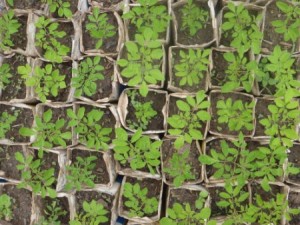
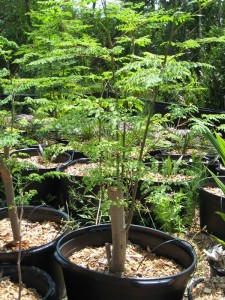
A Moringa Micro Plantation has a number of benefits for your animals and the environment, including:
- Enhanced nutrition leading to improved health, with reduced incidence of disease, improved disposition,less affected by insect pests such as flies and ticks
- Some Moringa cultivars can be utilized to provide semi-shade for animals.
- Moringa can be used for erosion control in areas where strong winds and long dry spells occur simultaneously, leading to serious soil loss.
- Moringa increases nutrient inputs, its long tap roots ‘mine’ nutrients from lower soil horizons that grass roots cannot reach.
- Moringa can be grown tightly spaced as a living edible forage hedge.
Moringa Micro Plantations are designed to enhance the existing environment with the goal of restoring long term sustainability.
Sustainable Plantations can design, plan and implement a Moringa Micro Plantation on your property. We can help you choose the right cultivars and methods of growing Moringa to best suit your needs. See our services page or contact us for more information.
The Moringa Tree is a Mineral Sponge!
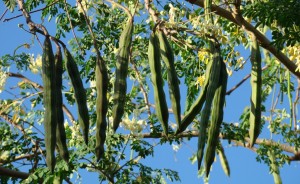
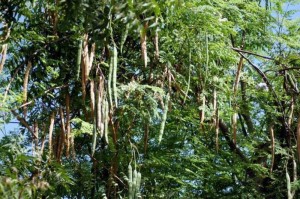
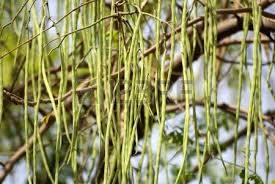
Moringa trees have an enormous capacity to absorb minerals from even the poorest soils, however the highest nutritive values of the Moringa plant are obtained from soil which has high mineral content. The majority of Australia’s soils are however extremely poor in minerals, among the poorest in the world.
Sustainable Plantations developed MORINGA BOOST-A Foliar Fertiliser to address the issue of multiple mineral deficiencies in Australian soil. Mineral deficiencies are implicated in most diseases and ailments in animals.
Research on Moringa reflects an overwhelmingly positive effect is observed from using an all natural Moringa spray and applying it to other crops. Trials have been conducted with soy beans, black beans, bell peppers, chia, onions, coffee, tea, tomatoes,wheat and chilli peppers. When grown with Moringa extract, crops have demonstrated faster and stronger growth, greater size at harvest and increases in yield between 20 and 35%.
Sustainable Plantations devised MORINGA BOOST-A Foliar Fertiliser to combine the growth stimulating and yield enhancing qualities of Moringa with over 70 bio-available plant derived minerals in a micro-biologically activated living solution that you can brew yourself on-site to use as required.
We recommend a monthly application of MORINGA BOOST-A to build the mineral and trace element levels and biological activity of the soil to grow the healthiest Moringa trees with the greatest nutrient levels.
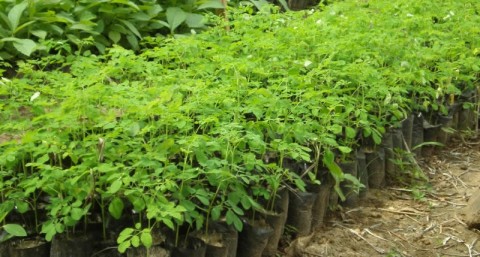
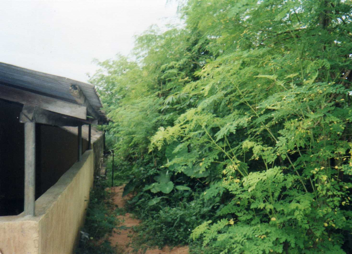
Technical Notes for Growing Moringa
- tolerant of droughts and can survive in places where rainfall is as low as 400 mm. Foliage production under such conditions is however reduced.
- low tolerance of water-logging.
- thrives in full sunlight
- does well in a wide range of soils, with pH ranging from 4.5 to 9, provided they are well-drained.
- has some salt tolerance (up to 3 dS/m during germination and 8 dS/m once well established)
- prefers temperatures ranging between 25 and 35°C, but has been known to survive temperatures in summer up to 48°.
- tolerates frost but will drop its leaves. It is ordinarily found at altitudes below 600m but has been cultivated at much higher altitudes.
- regular monthly applications of MORINGA BOOST-A Foliar Fertiliser encourages resilience in Moringa plant across a wide range of climatic extremes.
“In Australia it has been recorded growing on a very wide variety of soil types including sandy and coralline sandy soils, grey loam soils, red laterite soils, quartzite clay soils, stony and rocky soils and loamy clay soils “(CALM 2007; EPA 2007).
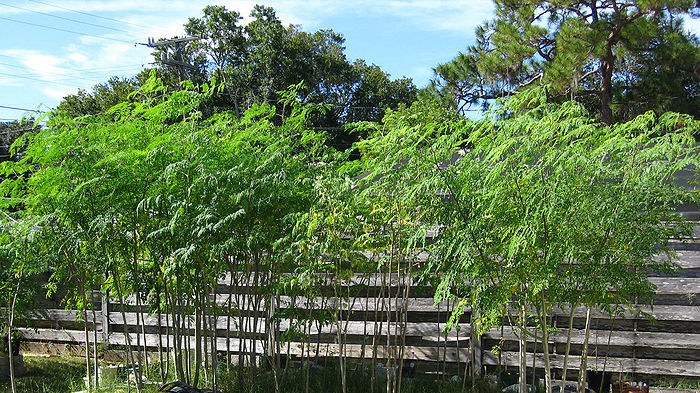
Animal feeding is the foundation of livestock production systems and animal breeding and reproduction and animal health are the two pillars. If the foundation is weak, the building is likely to crumble. A Moringa Micro Plantation can have many advantages and fulfill a number of requirements in small farming initiatives.
A challenge facing animal nutritionists is to introduce and promote alternative feed resources that have high nutritive value and are adapted to harsh environmental conditions. The ongoing climate change development is also expected to create harsher conditions: high temperature, drought, floods and drastic climatic variations.
The hardy nature of the Moringa tree, strengthened and enhanced with MORINGA BOOST-A Foliar Fertiliser can provide an abundant alternative source of high quality nutrition for animals when grown on a small scale.